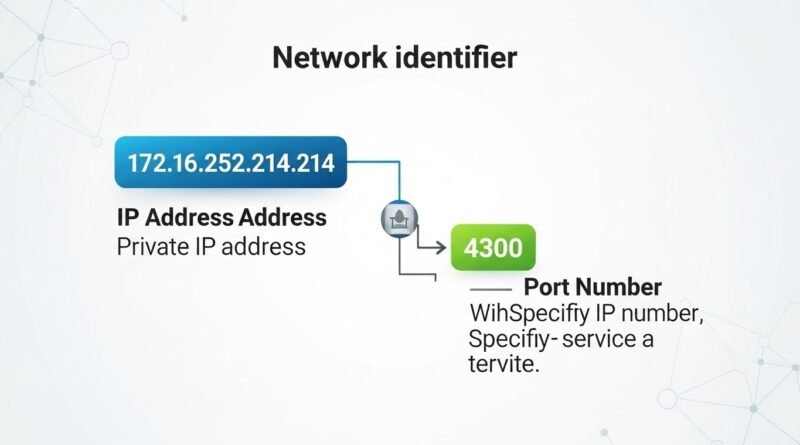
Everything You Need to Know About 172.16.252.214.4300 in Private Networks
Understanding internal network identifiers is essential for anyone working with routers, servers, or local applications. One such identifier is 172.16.252.214.4300, which often appears in internal traffic logs or configuration files. In this article, the keyword 172.16.252.214.4300 will be used naturally to help you understand its structure, purpose, and common use cases.
What Exactly Is 172.16.252.214.4300?
The keyword 172.16.252.214.4300 appears to represent a private IP address paired with a port number. The first part, 172.16.252.214, falls under the 172.16.0.0/12 private IP range, widely used in corporate LANs and controlled environments. The suffix “4300” refers to a port where a specific service or application may be running.
When you see 172.16.252.214.4300 in logs, it means a system attempted to connect to an internal service running on port 4300.
Why This IP-Port Combination Matters
Internal systems rely heavily on IP-plus-port combinations, and 172.16.252.214.4300 is a perfect example of how organisations separate services without exposing them to the internet. Devices communicate efficiently when an IP address identifies the machine, and the port identifies the exact application.
Technical teams often document addresses like 172.16.252.214.4300 so multiple departments can access the same tools without confusion or overlap.
How 172.16.252.214.4300 Is Used
There are several potential uses for 172.16.252.214.4300 in a private network:
- Internal admin dashboards
- Development environments
- System monitoring tools
- Testing APIs
- Local databases or analytics dashboards
Any request to 172.16.252.214.4300 typically stays within the organisation’s firewall, ensuring privacy and controlled access.
Troubleshooting Connection Issues
If a service running on 172.16.252.214.4300 becomes unavailable, admins must diagnose the issue quickly. Some common steps include:
- Checking whether the IP responds inside the LAN
- Verifying that port 4300 is open and the service is active
- Reviewing firewall rules to ensure traffic to 172.16.252.214.4300 is allowed
- Inspecting logs for failed connection attempts
Because private networks often host important operational tools, maintaining access to 172.16.252.214.4300 is crucial.
Security Importance
Even though private IPs remain hidden from the public internet, security is still vital. Systems that rely on 172.16.252.214.4300 must be protected with authentication, restricted access, and proper monitoring.
Unauthorised internal use of 172.16.252.214.4300 could expose sensitive data, disrupt operations, or compromise application stability.
Final Thoughts
In summary, 172.16.252.214.4300 represents a private IP address plus a port used to access a specific internal service. It plays an essential role in secure communication, system organisation, and internal workflow management. Understanding how 172.16.252.214.4300 functions can help network teams maintain performance, troubleshoot errors, and safeguard internal services.